On Saturday 9th November 2024 I will deliver a presentation at the Historical Materialism conference at SOAS, University of London.
This is the abstract of my paper, which is forthcoming in the journal Environment and Planning A: Economy and Space:
.
Value Capture and Value Production in the World Economy: A Marxian Analysis of Global Value Chains, 2000–2014
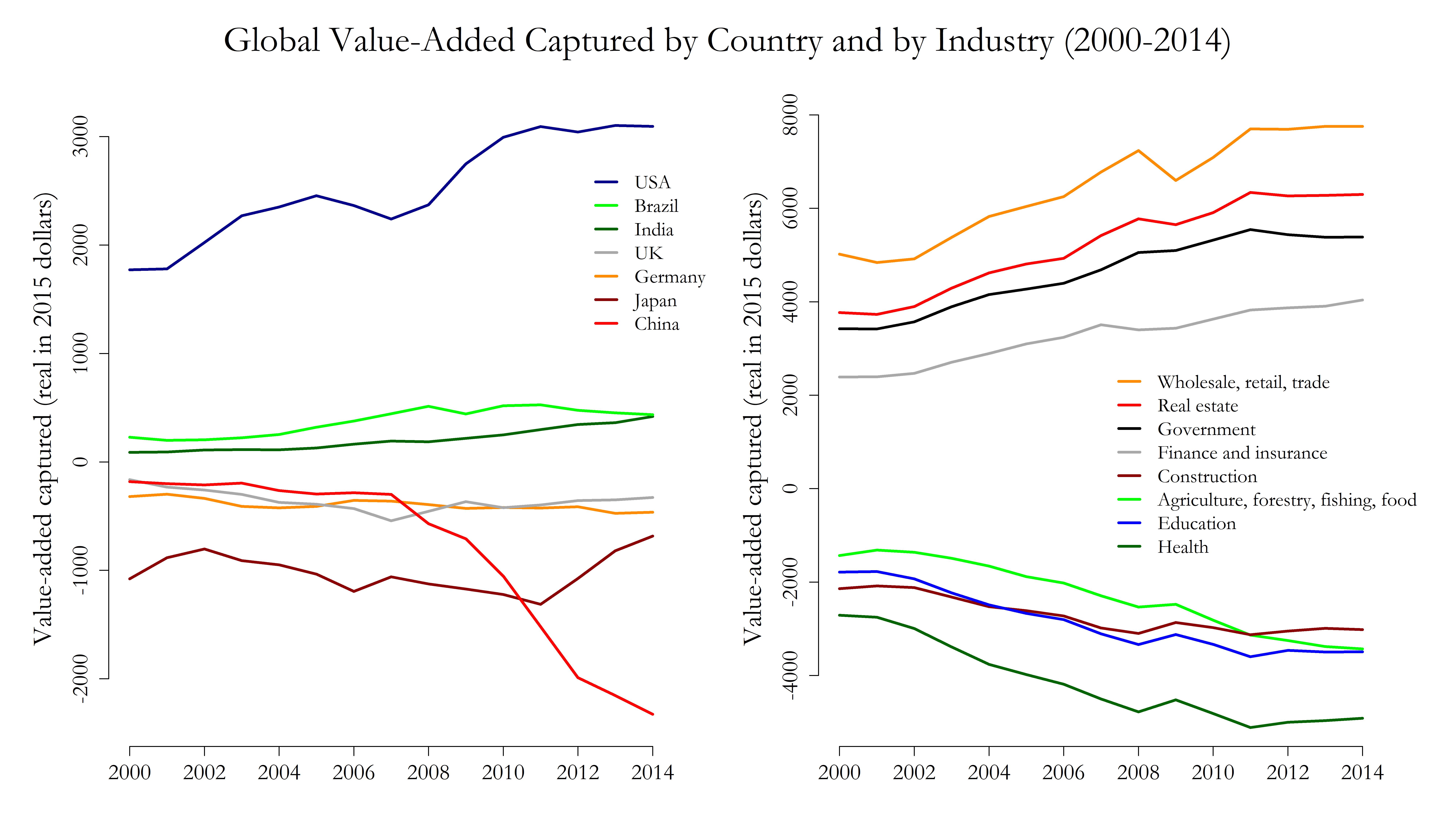
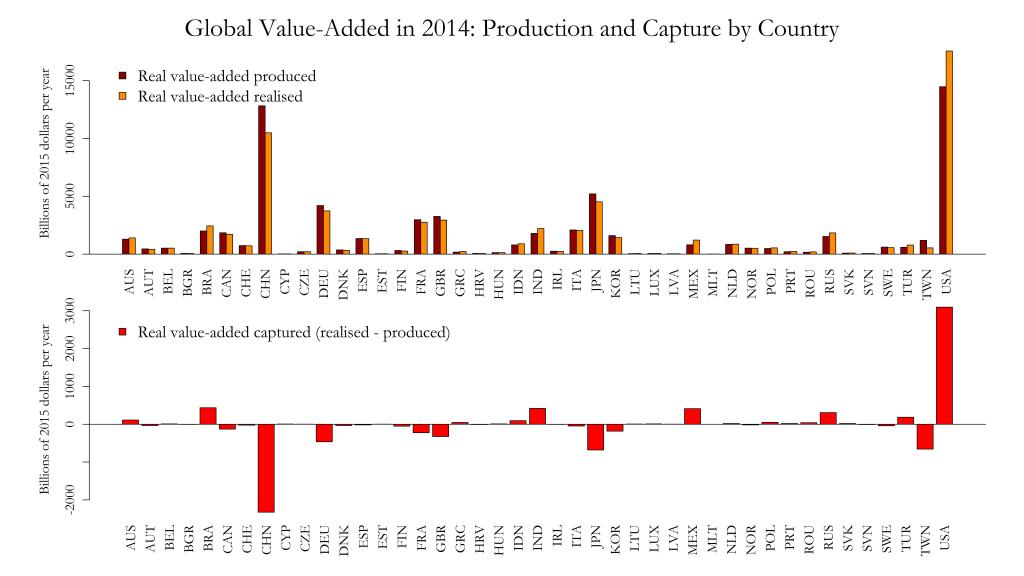
The paper estimates the production, realisation, and capture of economic value in the world economy from 2000 to 2014. Estimates show how value is produced and transferred across 56 sectors and 43 countries. The methodology builds on the Marxian literature and the productive-unproductive classification. Value production is the labour directly and indirectly required to produce goods and services within global value chains. Value capture is the deviation between value realisation and production. Results show that China is the largest giver of value while the USA is the largest capturer of value in the world economy. Unproductive activities (real estate, finance, and trade) and capital-intensive industries (manufacturing, mining, and oil) are value capturers. Labour-intensive industries (health, education, construction, agriculture, and services) transfer value away. The paper also demonstrates that the theory of unequal exchange is incompatible with the conventional assumption that all activities are productive. Only under the Marxian productive-unproductive classification do the results converge with unequal exchange theory.
Key words: world economy, global value chains, value capture, value transfer, unequal exchange
.
.
You can download my presentation slides using the following link:
Value Capture and Value Production in the World Economy: A Marxian Analysis of Global Value Chains, 2000-2014 [Historical Materialism conference at SOAS, University of London, UK] (November 2024)
.
.
.
 Tomas Rotta